Yves Perry · 20 September 2026
Historic Main Street Building Preservation Campaign Draws Unexpected Allies from Across Town
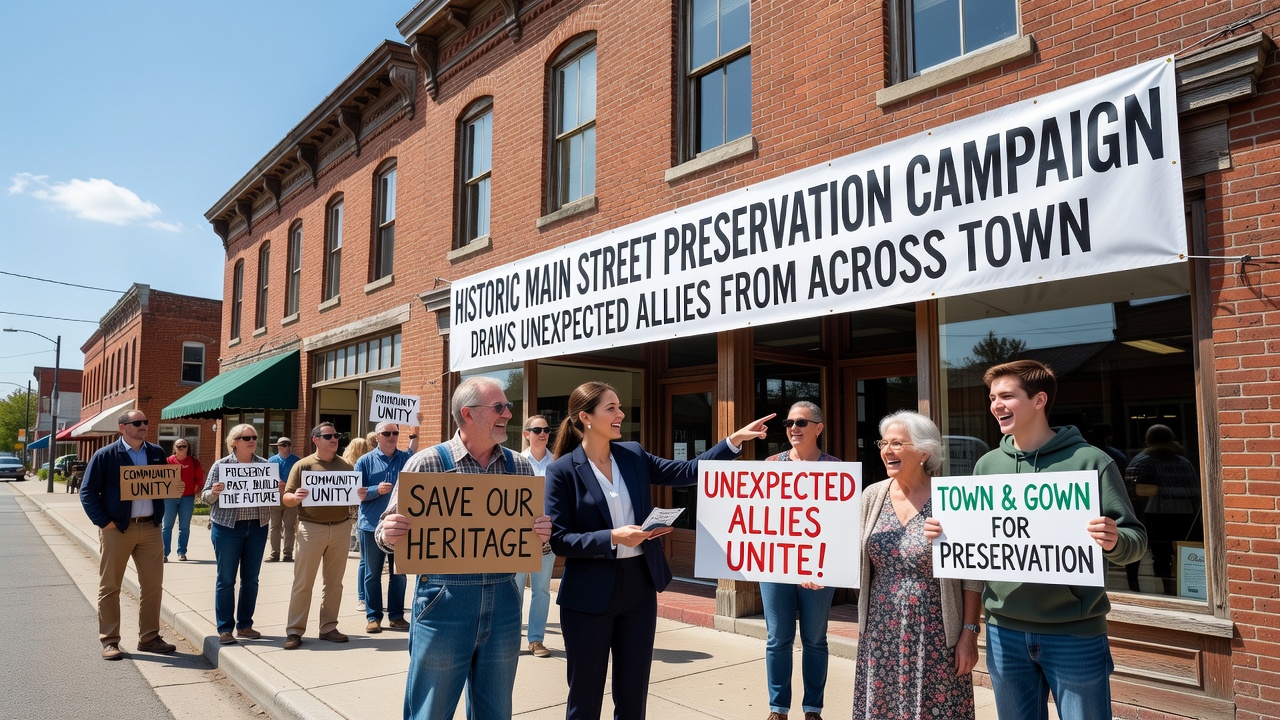
Community members in Brookvale launched a preservation campaign focused on several historic structures along Main Street in early 2026, and the effort quickly attracted support from groups that rarely collaborate on local projects. Local business owners joined forces with environmental advocates and arts organizations after data from the National Trust for Historic Preservation showed that restored buildings in similar towns retained up to 40 percent more economic activity than new constructions over a five-year period. Organizers scheduled public meetings starting in September 2026 to review architectural surveys and discuss funding options that include grants from state heritage programs.
Background of the Main Street Structures
Many of the buildings targeted for preservation date back to the late 19th and early 20th centuries when Brookvale served as a regional trade hub, and records indicate that several facades retain original brickwork and ironwork details that reflect the town's commercial past. Researchers from regional universities documented these features through photographic inventories completed in 2025, while city planning documents confirm that the structures fall within a designated historic district established by ordinance in 2018. The campaign emerged after developers submitted proposals that would have required partial demolition, prompting residents to form a steering committee that collected over 2,500 signatures in support of alternative reuse plans.
Unexpected Supporters Join the Effort
Support expanded beyond traditional preservation circles when a coalition of nearby farmers market vendors cited the buildings' role in hosting seasonal events that draw visitors from surrounding counties. Environmental groups pointed to studies conducted by the Australian Heritage Council that demonstrated adaptive reuse of older structures reduces construction waste by an average of 60 percent compared with new builds. Artists and small gallery operators added their voices after noting that ground-floor spaces could accommodate studios without major alterations, creating a network that now includes representatives from education institutions and local tourism boards.
Campaign Activities Planned for September 2026
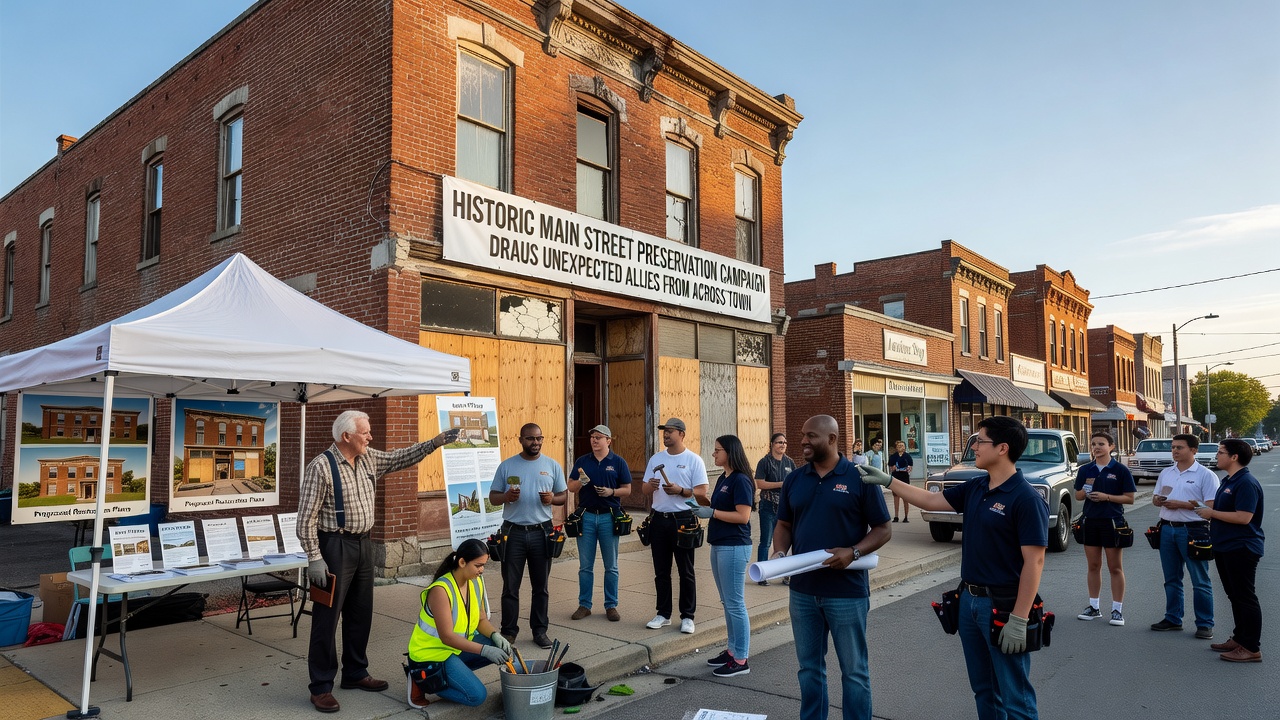
September 2026 marks the start of a series of walking tours and workshops designed to educate participants on the structural assessments already completed by licensed engineers. These events will feature presentations from the steering committee along with updates on grant applications submitted to federal and state agencies. Organizers have also arranged for virtual participation options to accommodate residents who work outside the immediate area, while printed materials distributed at libraries and community centers outline specific timelines for facade repairs and interior upgrades that comply with existing preservation guidelines.
Funding and Technical Support Details
Financial projections prepared by the committee estimate that initial restoration phases will require approximately 1.8 million dollars, with sources including private donations matched by local business contributions and potential awards from national preservation funds. Technical assistance has come from architects specializing in historic masonry who previously worked on similar projects in Midwestern towns, and their reports emphasize that the buildings remain structurally sound despite surface-level deterioration noted in the 2025 surveys. Committee members continue to coordinate with city officials to align the campaign timeline with upcoming infrastructure improvements scheduled along adjacent streets.
Broader Community Impact Observed So Far
Early indicators show increased foot traffic near the targeted buildings during weekend events, and local real estate listings have begun highlighting proximity to the historic district as a selling point. Data compiled by the steering committee tracks volunteer hours logged at cleanup days, which exceeded 1,200 by mid-2026, while partnerships with school history classes have produced student-led research projects that add primary source material to the public record. These developments demonstrate how the campaign has expanded its reach through cross-sector involvement rather than remaining confined to a single interest group.
Conclusion
The preservation initiative on Main Street continues to evolve as additional stakeholders review the compiled documentation and participate in scheduled September 2026 activities. Ongoing coordination among the diverse allies ensures that technical requirements and community priorities remain aligned throughout the restoration phases ahead.